Case Study
Search visibility for HVAC/R AI Pro
Search Console and search-result snapshots, captured September 13, 2026 according to the original evidence record. Website work began about five months before the September 25, 2026 owner confirmation. Impressions and clicks are not leads or revenue.
The situation
HVAC/R AI Pro is an AI diagnostic tool for HVAC and refrigeration technicians. Point a phone at an equipment nameplate, get the unit identified, then work the problem with structured troubleshooting guidance, airflow tools, and estimate support.
HVAC/R AI Pro was my first client, through a trade of services: its owner handled HVAC equipment repair, and I did SEO work in return, not a cash engagement. I started working on its website about five months before September 25, 2026. The software was already live; that work period refers to the website and search work, not the product launch.
The competitive picture was not favorable. Search results for every relevant term were held by two groups: Apple and Google Play app listings, and "best HVAC apps" roundups published by field service software companies with dedicated content teams. Established technician apps like Bluon and measureQuick had years of authority and large installed user bases.
The work focused on explaining the product's actual workflows.
What I built
I developed the page architecture and wrote the content for the site's topical cluster, structured as a hub with supporting pages around each of the product's real workflows:
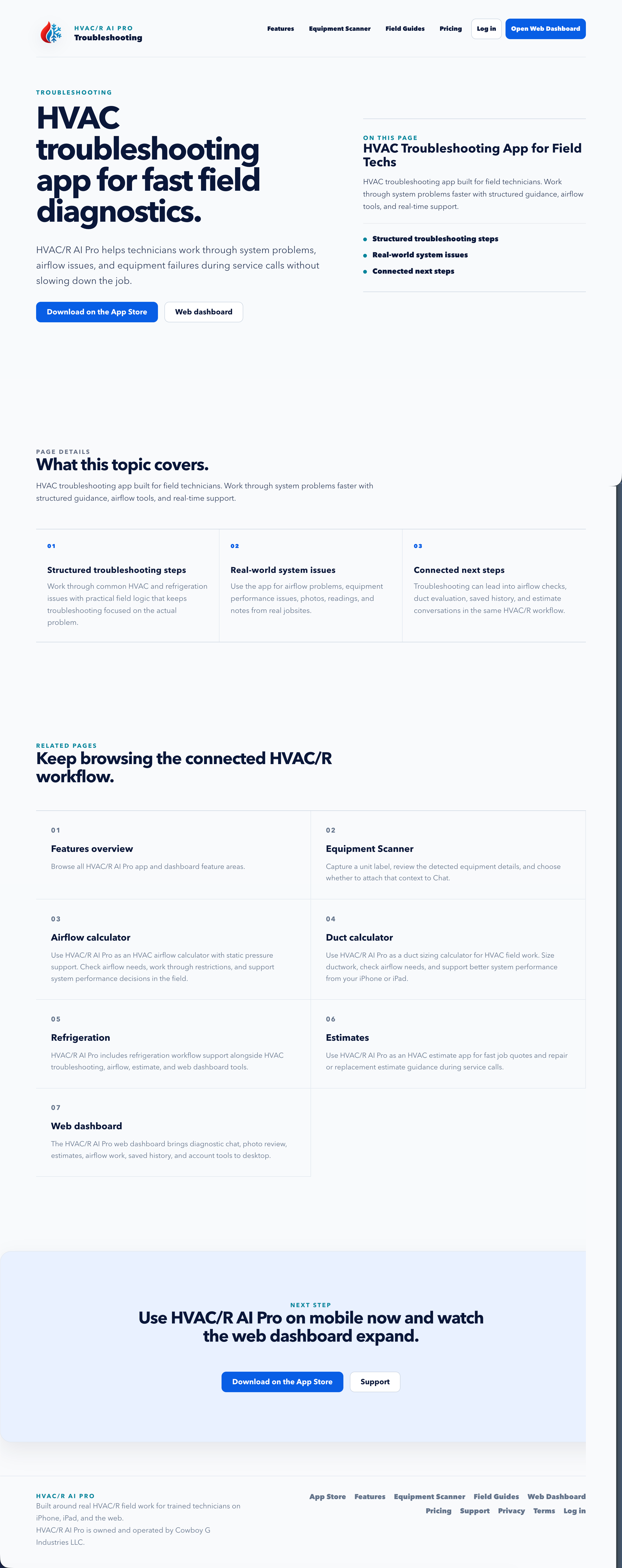
- Troubleshooting (
/hvac-troubleshooting-app), the primary commercial page - Equipment Scanner (
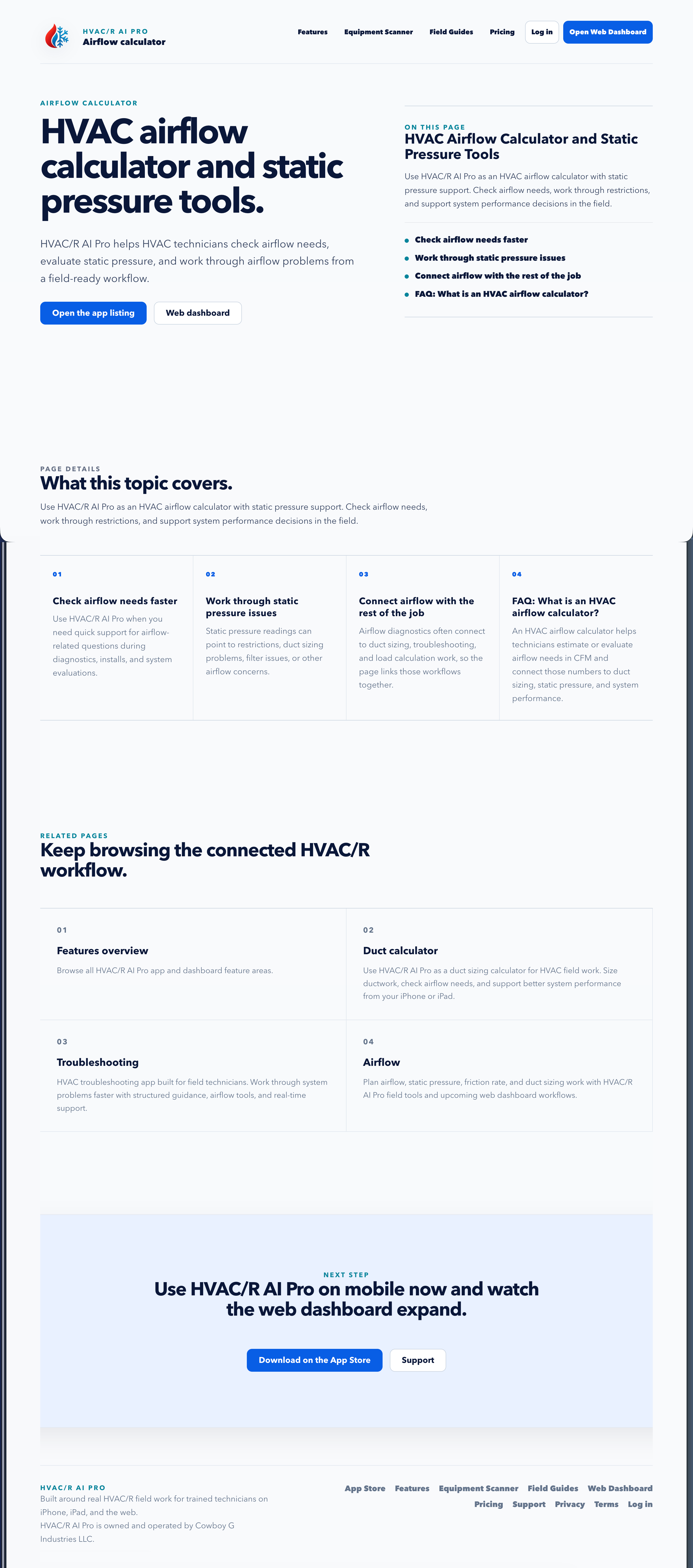
/equipment-scanner), nameplate capture and equipment identification - Airflow and static pressure (
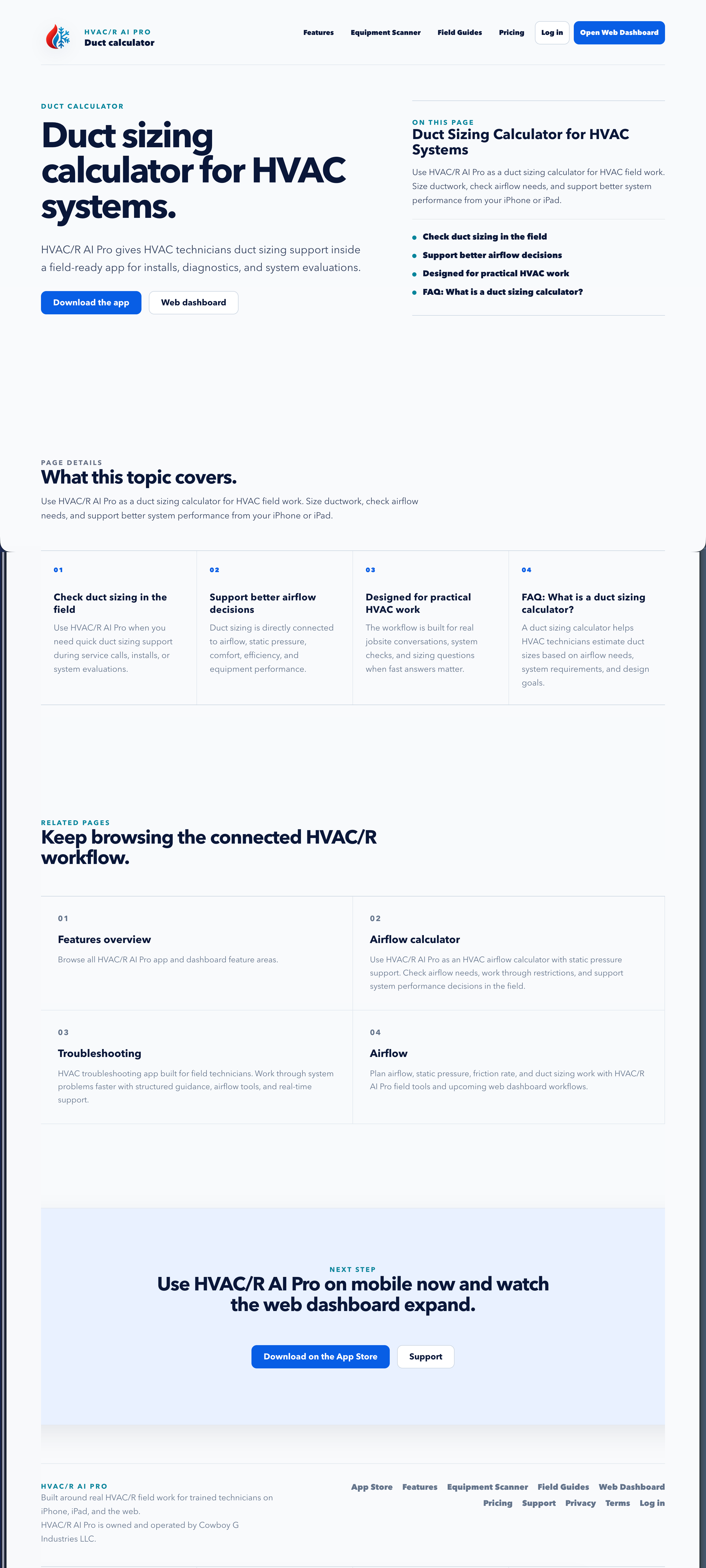
/hvac-airflow-calculator,/airflow-static-pressure-tools) - Duct sizing (
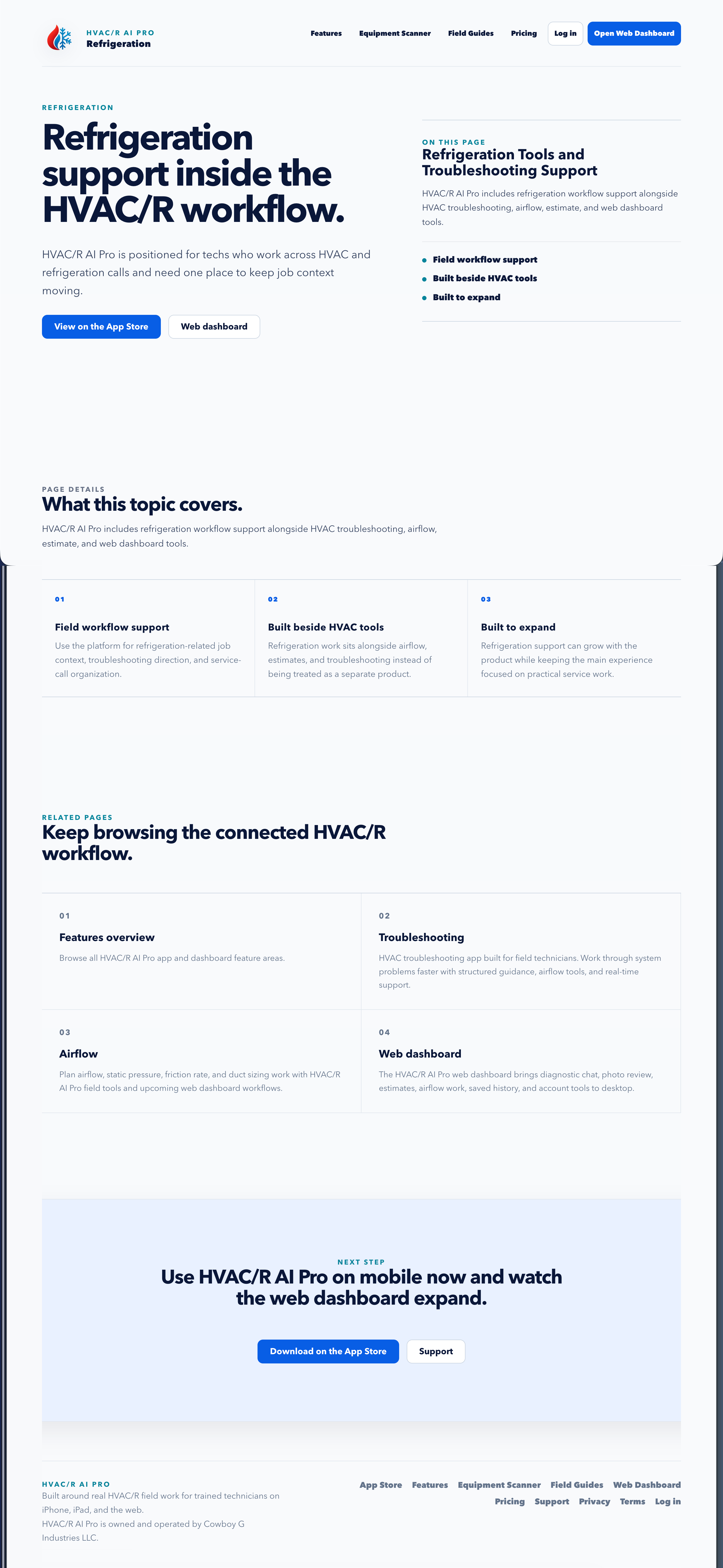
/duct-sizing-calculator,/duct-sizing-ductulator-app) - Refrigeration (
/refrigeration-tools) - Estimates (
/hvac-estimate-app) - Web dashboard (
/hvac-web-dashboard) - Features overview (
/features)
Each page was mapped to a specific query cluster before it was written, with internal linking designed so the pages reinforce each other instead of competing.
The editorial rule I set was that the pages had to be honest about what the product does not do. The Equipment Scanner page states plainly where nameplate capture fails: faded plates, bad angles, partial reads. Technicians are a skeptical audience who catch overstatement immediately, and pages that acknowledge limits earn more trust than pages that don't.
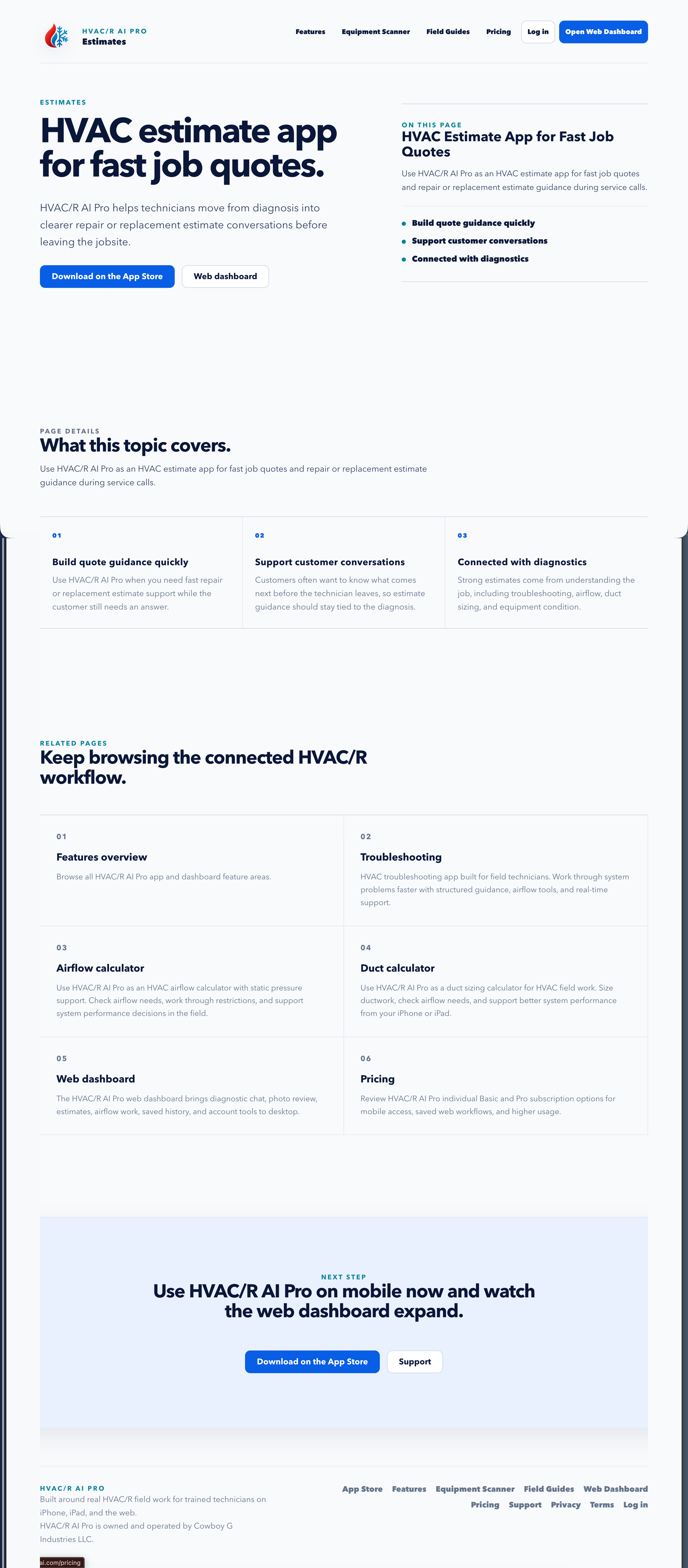
The blog: field guides that feed the pillar pages
Once the pillar pages were live, I built out a blog of field guides under the same architecture: each post answers one specific diagnostic question a technician would actually type into Google, then links back into the pillar page that covers the broader workflow. The blog adds practical answers to specific diagnostic questions and links readers to the related product pages. (Want to build one for your own site? Here is how to build a topic cluster, and the full AI search visibility guide.)
- Why is my AC not cooling but the fan is running? — supports Troubleshooting and Refrigeration tools
- Why is my AC freezing up? — supports Troubleshooting and Refrigeration tools
- What should static pressure be in HVAC systems? — supports Airflow and static pressure
- What causes high static pressure in HVAC systems? — supports Airflow and static pressure
- How to measure airflow in HVAC systems — supports Airflow and static pressure
- How to troubleshoot low airflow in HVAC systems — supports Troubleshooting and Airflow and static pressure
- How to size ductwork correctly — supports Duct sizing
- Why is my furnace blowing cold air? — supports Troubleshooting
- How to estimate HVAC jobs in the field — supports Estimates
Every post follows the same editorial rule as the pillar pages: work the diagnostic logic a technician would actually use in the field, then connect it to a specific tool rather than a generic pitch.
Results
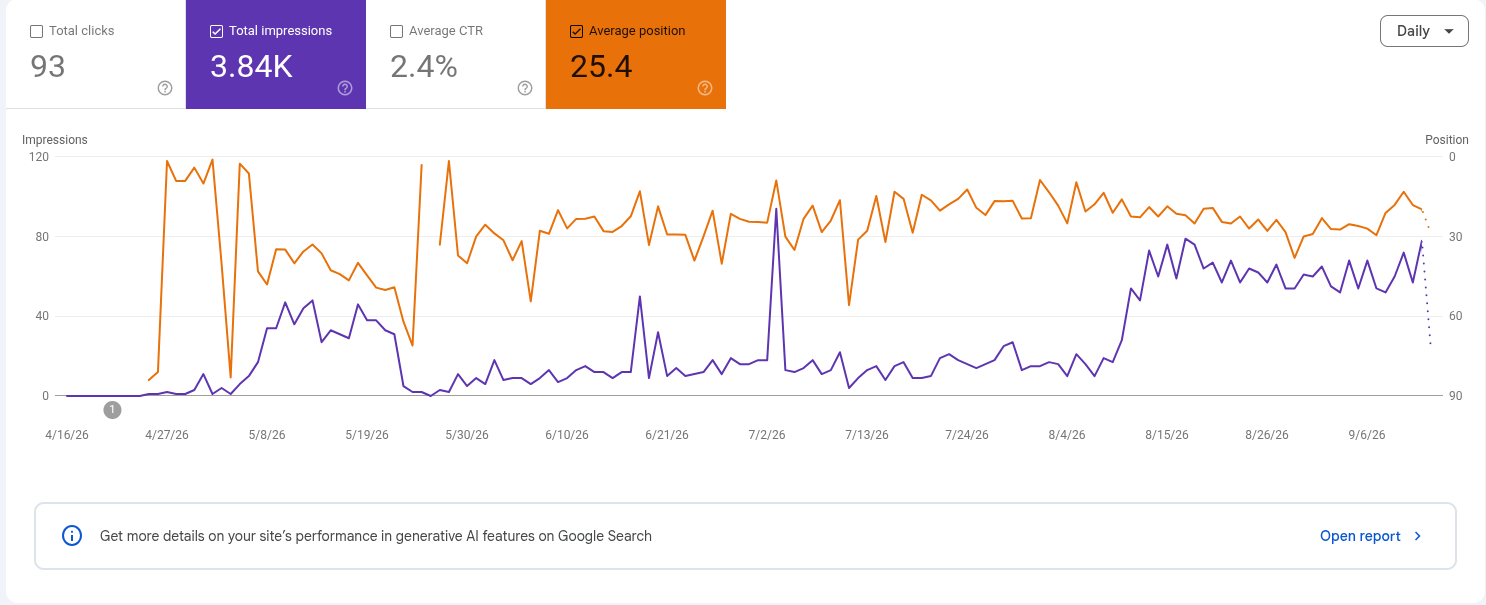
The images below include Google Search Console captures and saved Google search results. The original case-study record dates the captures September 13, 2026. A search-result snapshot and an aggregate Search Console measurement describe different things; neither establishes leads or revenue.
The saved Search Console snapshot
| Metric | Value |
|---|---|
| Total impressions shown | Approximately 3.84K |
| Total clicks | 93 |
| Average CTR | 2.4% |
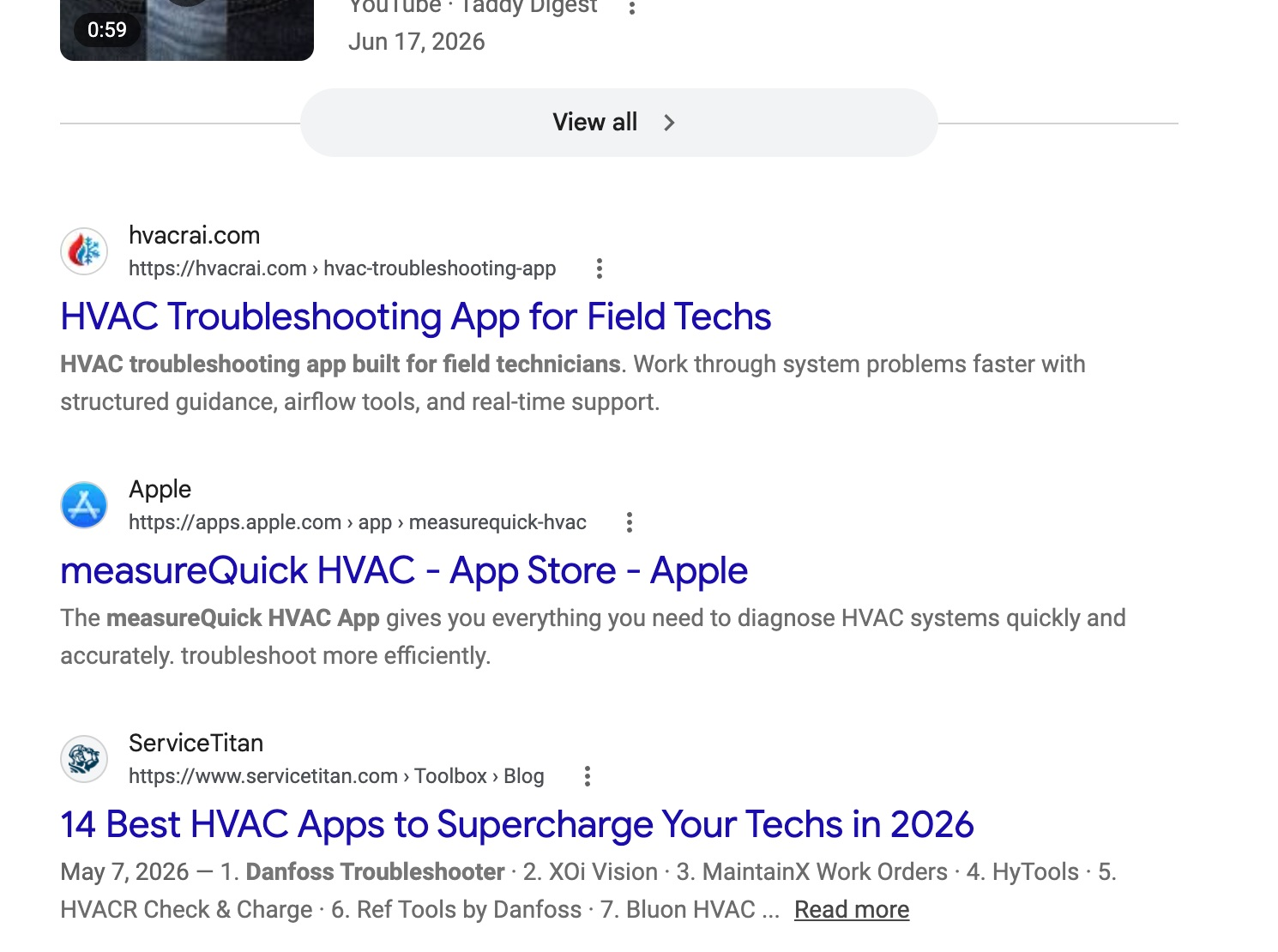
Page-one placement on the head term
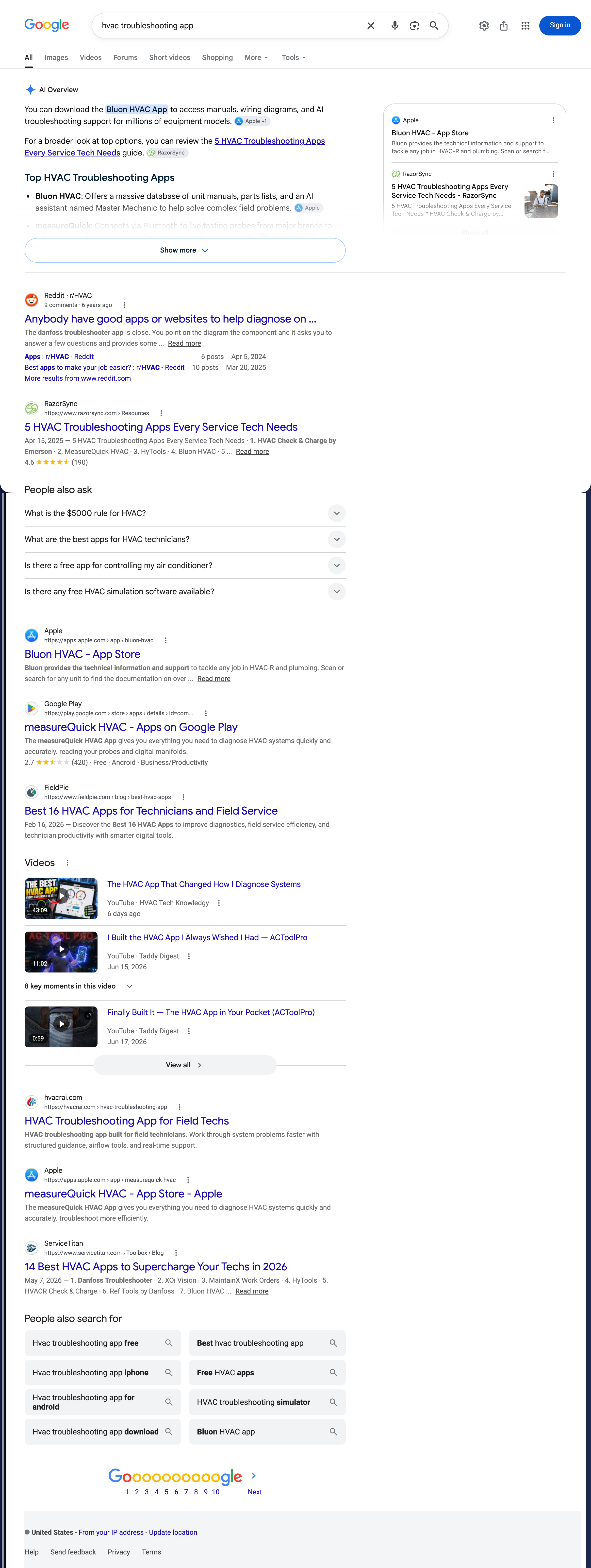
The saved result for "hvac troubleshooting app," dated September 13, 2026, shows /hvac-troubleshooting-app on page one. The original record describes it as sixth organically in a signed-out US search. Results can change by date and search context.
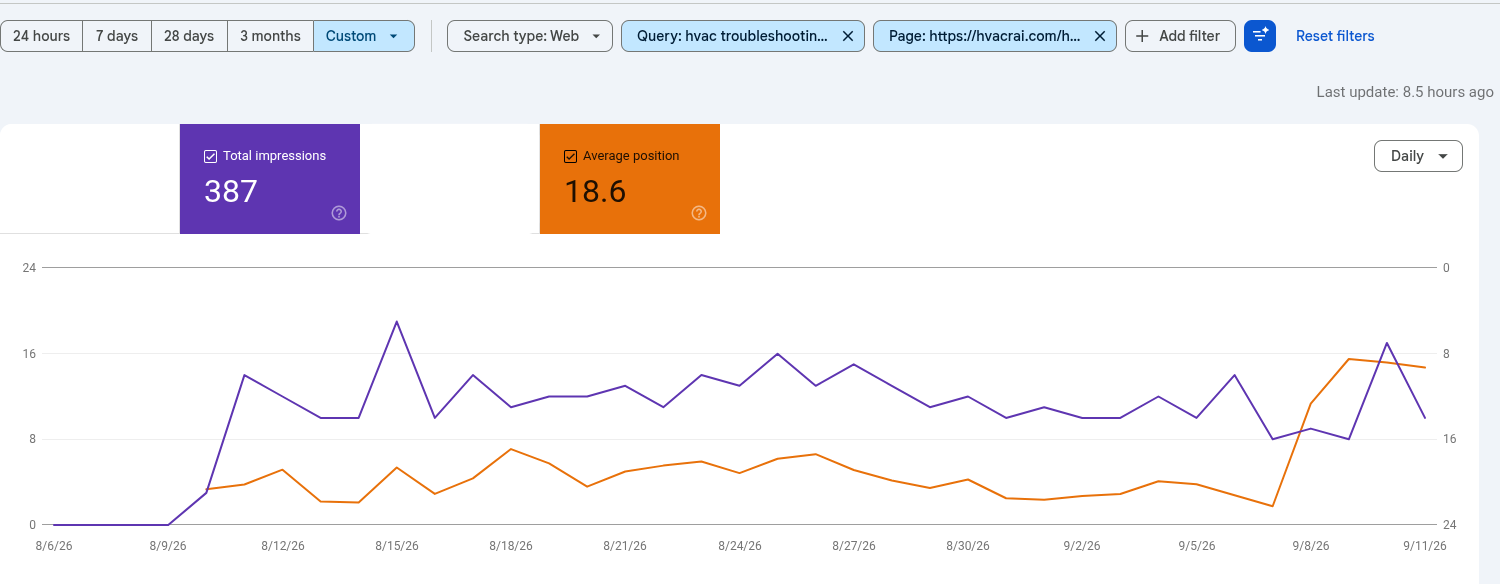
That improvement was recorded on September 8, 2026, before the optimization work described below. I include it because it is in the data, not because I am claiming it.
A query-level observation
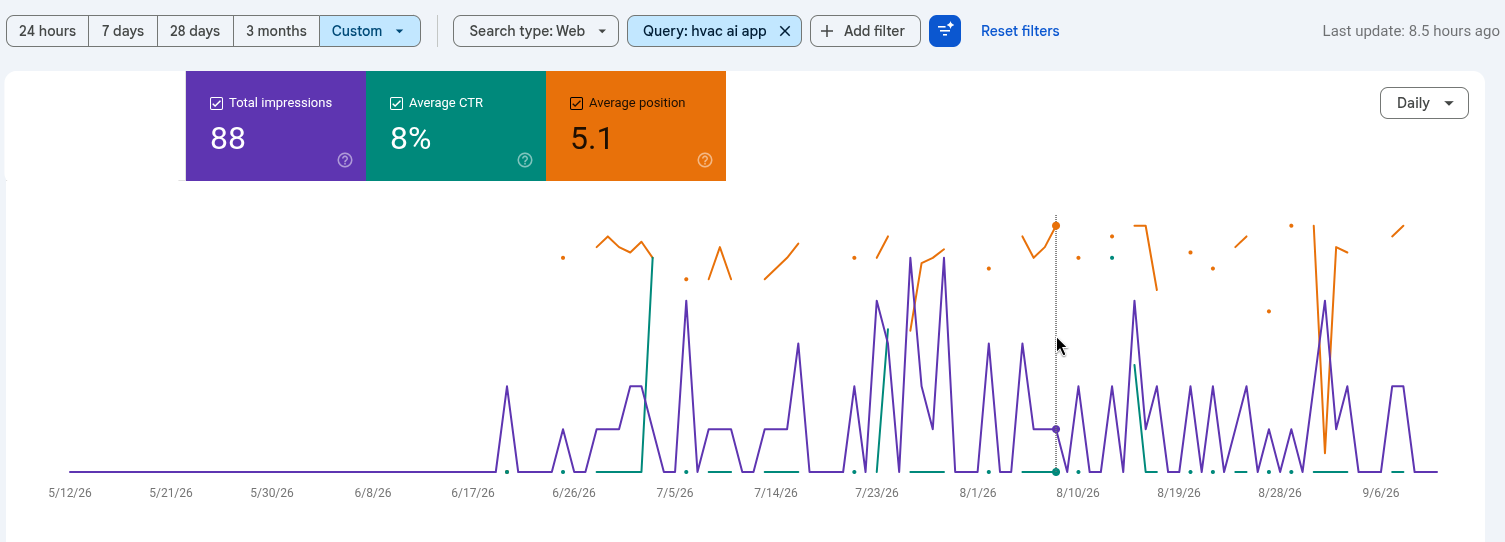
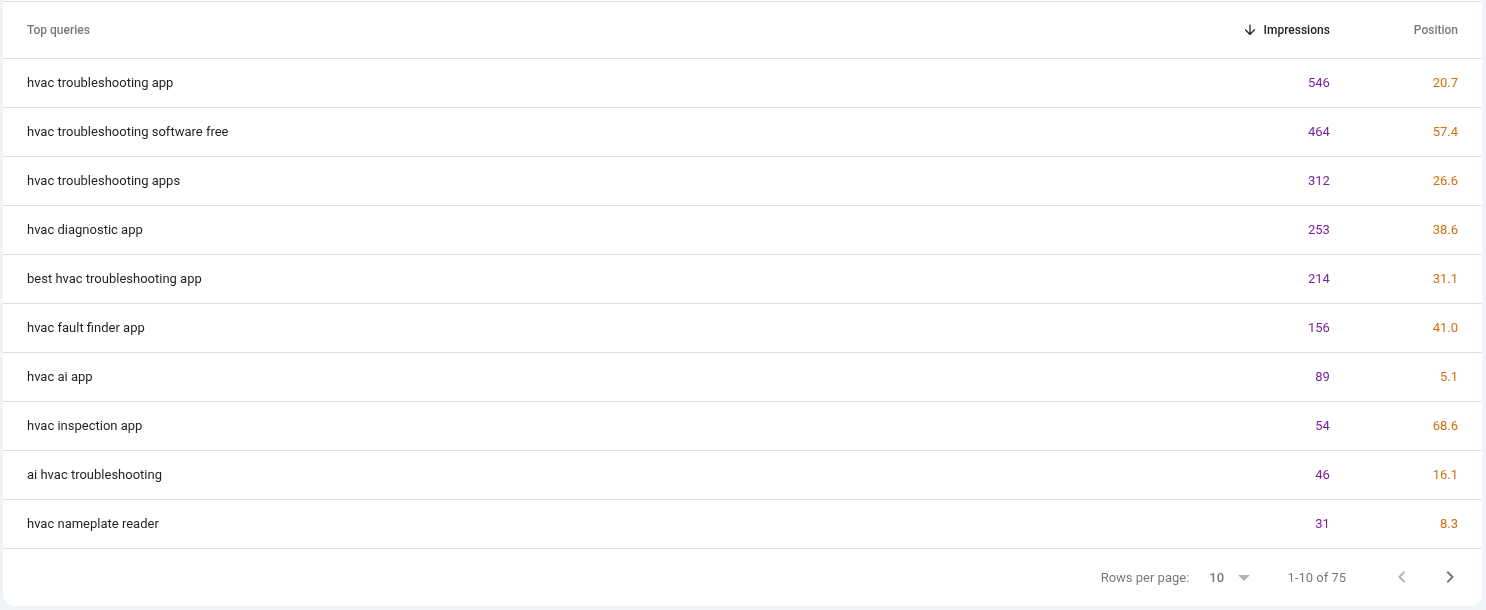
The saved Search Console capture for "hvac ai app" shows average position 5.1 and an 8% click-through rate. Click-through rate measures clicks relative to impressions, not customer conversion.
Named first in Google's AI Overview
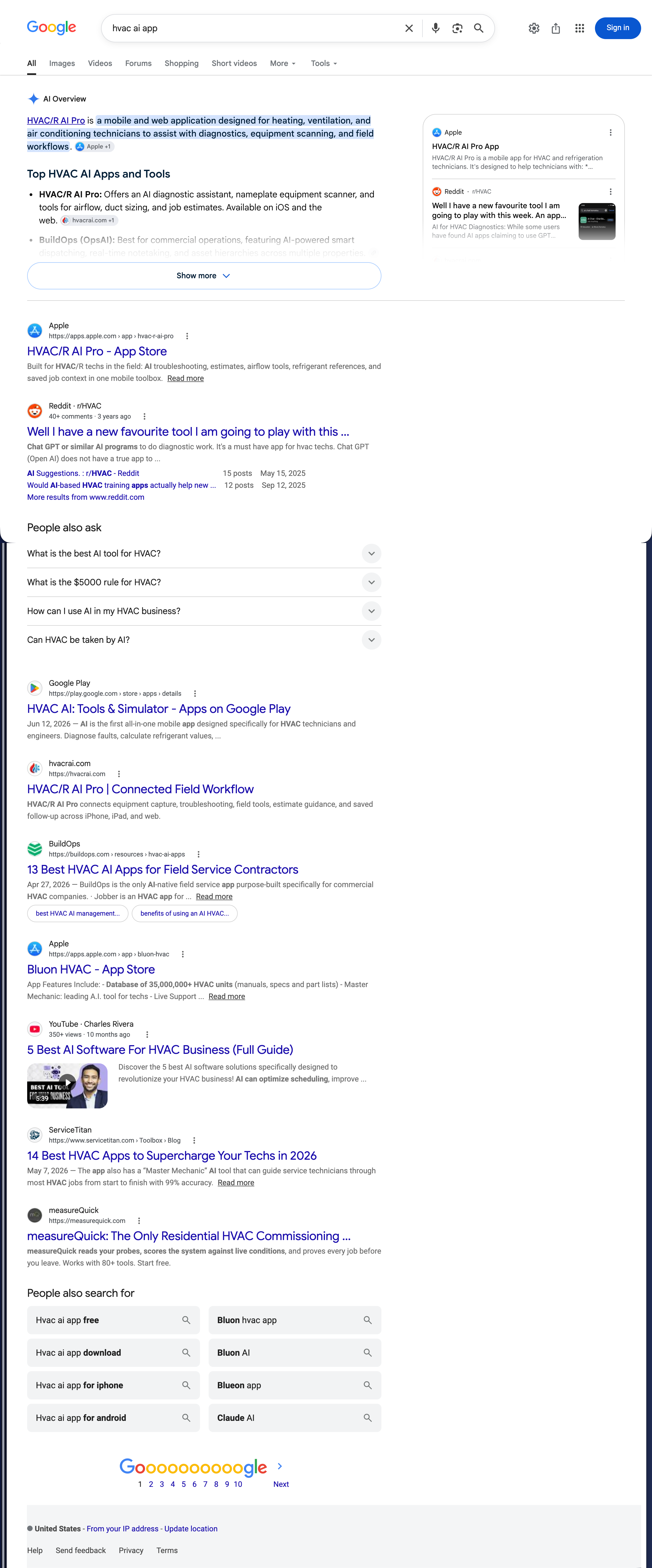
In the saved September 13, 2026 result for "hvac ai app," the AI Overview mentions HVAC/R AI Pro and lists it first under "Top HVAC AI Apps and Tools." The product is software used by HVAC technicians.
This is an observed mention for that query and capture, not a universal or lasting AI ranking. It does not show whether anyone became a customer.
Cluster performance
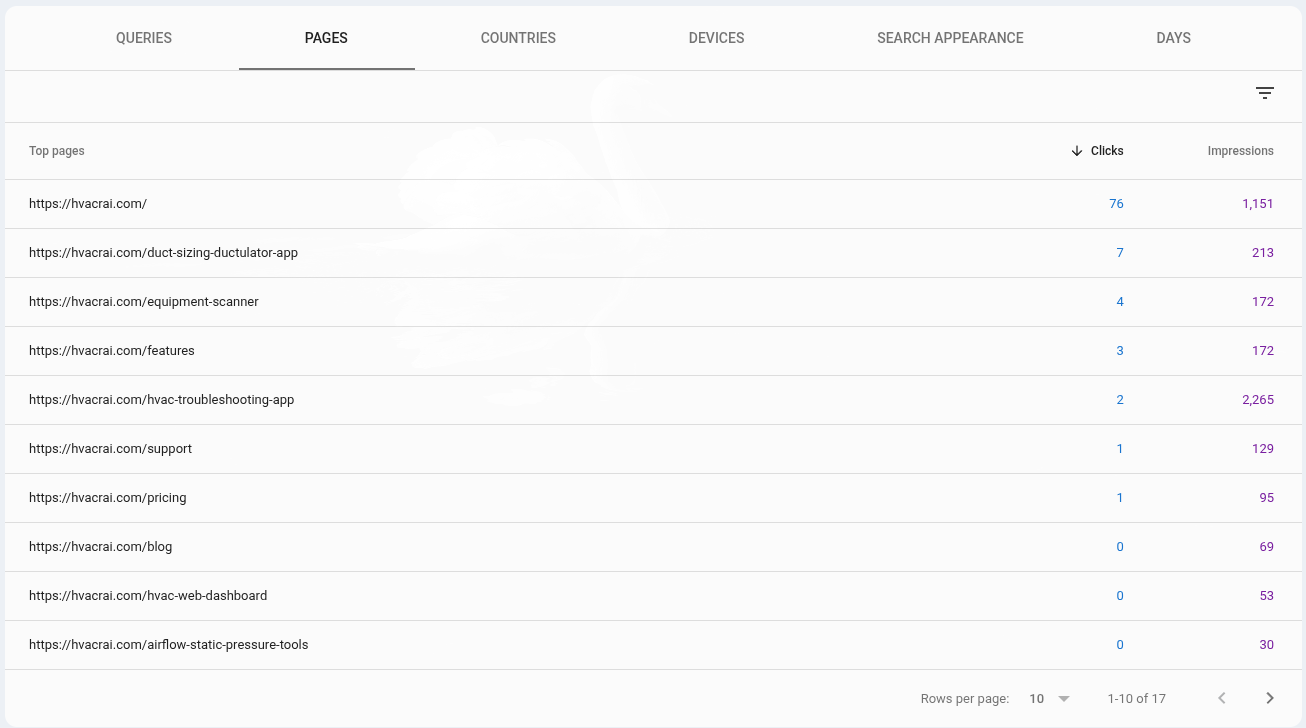
Appendix A
Full SERP: "hvac troubleshooting app"
Complete page one, September 13, 2026, signed out, United States. The hvacrai.com result appears sixth organically.
Appendix B
Full SERP: "hvac ai app"
Complete page one including the AI Overview, September 13, 2026, signed out, United States. HVAC/R AI Pro is named first under "Top HVAC AI Apps and Tools."
What does your product need?
Get a free visibility audit within 24 hours. No call required.
Request a free software visibility audit